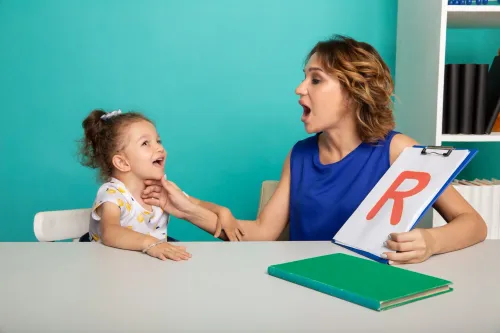

For children with hearing loss, learning to communicate through spoken language involves more than simply hearing sounds. They need to recognise meaningful sounds, understand spoken words and gradually use listening as part of everyday communication. Auditory Verbal Therapy in Coimbatore is designed to develop these abilities through structured listening and spoken-language activities.
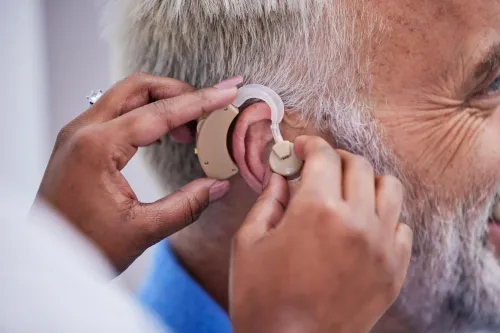
Auditory verbal therapy is commonly considered for children who use hearing aids or cochlear implants. Therapy focuses on helping the child make effective use of the auditory information available through their hearing technology.
What Does Auditory Verbal Therapy Focus On?
The approach places listening at the centre of communication development. Instead of treating listening and speaking as separate abilities, therapy works on the connection between hearing a sound, understanding its meaning and responding appropriately.
Depending on the child's age and current abilities, sessions may work on
- Detecting environmental and speech sounds
- Identifying differences between sounds
- Recognising familiar words
- Following spoken instructions
- Building vocabulary
- Understanding questions and conversations
- Developing clearer spoken language
- Improving listening in everyday situations
Progress is usually gradual. A child may first learn to notice a sound before being able to identify, understand and eventually respond to it.
Why Early Listening Experiences Matter
The early years are an important period for speech and language development. When hearing difficulty affects access to speech sounds, children may have fewer opportunities to learn language incidentally from conversations happening around them.
Early identification and suitable hearing support can therefore be important. Once hearing technology has been appropriately fitted, therapy can help children learn how to use the sound they receive.
Parents should remember that hearing devices and therapy have different roles. A hearing aid or cochlear implant provides access to sound, while rehabilitation helps the child interpret and use that auditory information for communication.
Parents Are an Important Part of the Process
A significant feature of auditory verbal intervention is the involvement of parents and caregivers. Children spend far more time at home than in a therapy room, so ordinary routines provide valuable listening opportunities.
Parents may be guided to encourage listening during
- Getting dressed
- Mealtimes
- Bath time
- Story reading
- Play
- Travelling
- Shopping
- Conversations with family members
For example, instead of repeatedly asking a child to name objects, a parent may naturally describe what is happening The water is running, Your shoes are near the door, or I can hear the dog barking.
This provides language within meaningful situations.
Therapy Should Be Individualised
Two children with similar hearing levels may develop communication very differently. Age at identification, hearing-device use, consistency of auditory access, developmental profile, family participation and other factors can influence progress.
For families in Coimbatore and surrounding areas of Tamil Nadu, an appropriate programme should therefore begin with an understanding of the child's current listening, speech and language abilities rather than following a standard set of exercises.
At Sky Speech Therapy, auditory and communication needs can be considered together when planning intervention. This helps therapy remain connected to the child's functional communication rather than focusing only on isolated tasks.
What Progress Can Look Like
Progress is not always measured by how many new words a child says. Earlier changes may include turning towards sounds, responding more consistently to their name, following familiar spoken directions or recognising words without relying as heavily on visual cues.
Over time, therapy may support increasingly complex listening and spoken-language skills.
Families should also maintain recommended audiology follow-ups. If a child's access to sound changes because of device, ear or hearing-related factors, communication progress may also be affected.
Auditory verbal therapy is therefore best understood as an ongoing developmental process. When appropriate hearing access, structured therapy and meaningful listening opportunities at home work together, children can receive consistent support for building listening and spoken communication skills.
Keywords