
Learn how auditory verbal therapy can support listening and spoken-language development in children using hearing aids or cochlear implants.
Helping Children Learn to Listen and Communicate
Parents of children with hearing loss often ask how therapy can help their child learn to listen, understand speech and develop spoken communication.
Auditory Verbal Therapy, commonly referred to as AVT, is a specialized listening-based approach for children who are deaf or hard of hearing. It aims to help children make meaningful use of the auditory information available through appropriately selected and programmed hearing technology.
Depending on a child’s hearing needs, this technology may include hearing aids or cochlear implants.
AVT is not simply about teaching a child to pronounce individual speech sounds. The broader goal is to help the child develop listening, understanding and spoken communication through meaningful interaction.
What Skills Can Be Supported?
Therapy may gradually work on sound awareness, sound identification, understanding spoken words, following verbal instructions, vocabulary, sentence formation, speech clarity and conversational abilities.
The exact goals should always be individualized according to the child’s age, hearing access, developmental level, communication abilities and family priorities.
Why Consistent Hearing Access Matters
A child cannot develop listening skills effectively without reliable access to sound.
For children using hearing aids or cochlear implants, regular device use, appropriate programming and recommended audiological follow-up are therefore essential.
If the hearing technology is not functioning appropriately or is not being used consistently, the amount and quality of auditory information available to the child may be reduced.
Speech and language intervention should therefore work alongside appropriate audiological management rather than being considered an isolated service.
Parents Are an Important Part of the Process
Children spend only a limited amount of time in therapy. Most listening and language learning happens during everyday life.
Parents and caregivers can create meaningful listening opportunities while dressing the child, preparing meals, reading books, playing, travelling or simply talking about what is happening around them.
The aim is not to turn the home into a therapy room. Instead, families learn how to make listening and spoken communication a natural part of everyday interaction.
What Happens During Therapy?
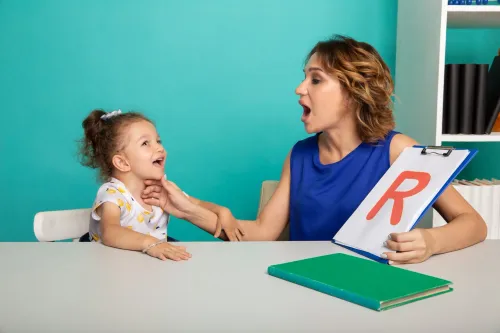
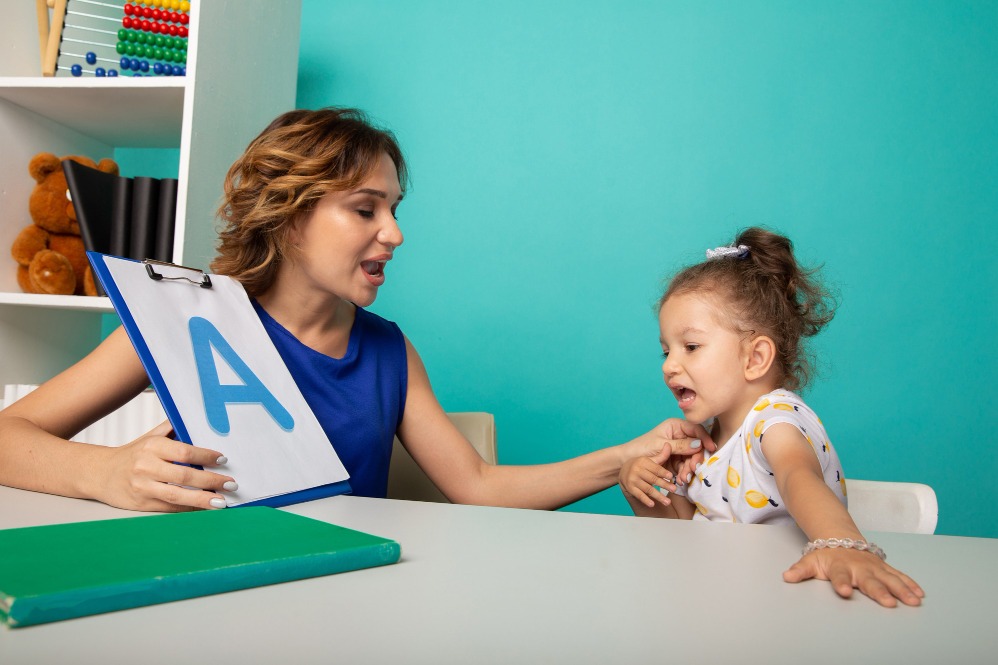
For younger children, sessions may look playful while still having clearly defined therapeutic goals.
A clinician may use toys, books, pictures, songs or everyday activities to encourage the child to listen, recognise sounds, understand words, follow directions and use spoken language.
As abilities develop, activities can gradually progress toward more complex listening tasks, longer sentences, questions, multi-step directions and conversations.
Every Child Progresses Differently
Parents naturally want to know how quickly their child will begin speaking.
There is no single timeline that applies to every child. Progress may be influenced by the age at which hearing loss was identified, degree and type of hearing loss, consistency of hearing-device use, access to appropriate amplification, additional developmental needs, family participation, frequency of intervention and individual learning pace.
The focus should therefore be on measurable individual progress rather than guaranteed outcomes within a fixed period.
When Should Parents Consider an Assessment?
If your child uses hearing aids or a cochlear implant and you have concerns about listening, understanding speech or spoken-language development, a combined hearing and communication assessment can help identify appropriate next steps.
Sky Speech and Hearing Care, Coimbatore provides audiological and speech-language services to help families understand their child’s communication needs and plan intervention where clinically appropriate.
Clinically reviewed by: Dr. V. R. Pradeep, BASLP, MASLP, PhD Audiologist and Speech-Language Pathologist Sky Speech and Hearing Care, Coimbatore.