

Learn why speech disorder treatment should begin with a detailed assessment and how individualized speech therapy supports communication.
Speech Difficulties Are Not All the Same
Speech difficulties can affect communication at home, school, work and in social situations.
However, ‘speech disorder’ is a broad term. Different people may experience very different types of communication problems, which is why effective treatment should begin with identifying the specific difficulty.
A child who substitutes certain speech sounds requires a different approach from an adult whose speech changes following a neurological condition.
What Can a Speech Assessment Examine?
Depending on the concern, a speech-language assessment may examine speech-sound production, articulation, speech intelligibility, fluency, voice, oral structures and movements, motor-speech abilities, language and functional communication.
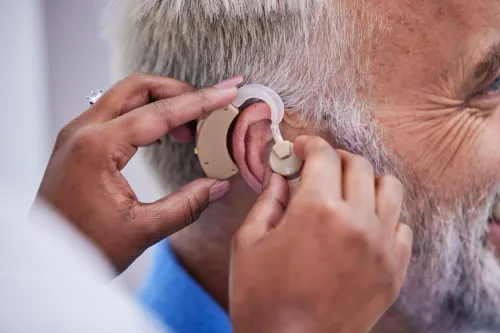
Hearing may also need to be considered because reduced auditory access can influence speech and language development.
A detailed case history is equally important. The clinician may ask when the problem began, whether it has changed, what previous intervention has been provided and how the communication difficulty affects everyday life.
Treatment Should Match the Findings
Speech therapy should not begin with the same set of exercises for everyone.
For speech-sound difficulties, therapy may involve learning how a target sound is produced and gradually practising it in syllables, words, sentences and natural conversation.
Fluency intervention may focus on communication strategies and individual speaking needs.
Motor-speech intervention may require structured activities directed toward speech planning, coordination or movement.
Voice problems require appropriate evaluation, and some voice concerns may also require medical assessment before or alongside therapy.
Practice Outside Therapy Is Important
Progress often depends on how effectively appropriate strategies carry over into everyday communication.
For children, practice may be incorporated into play, reading or normal family conversations.
Adults may practise techniques during telephone conversations, professional communication, family discussions or community activities.
Home activities should follow professional guidance. Simply repeating a speech sound incorrectly many times is unlikely to be helpful.
How Should Progress Be Measured?
Improvement should be based on more than the impression that someone ‘sounds better.’
Depending on the condition, progress may be measured through target-sound accuracy, overall intelligibility, ability to use the skill in conversation, communication participation, fluency characteristics or increasing independence with learned strategies.
Goals can then be modified as progress occurs.
When Should You Seek Assessment?
Assessment may be useful when speech difficulties persist, significantly reduce intelligibility, affect confidence or participation, or appear different from what would normally be expected for the person’s age and development.
For adults, a sudden new change in speech should not automatically be considered a routine speech-therapy problem. Sudden speech difficulty—especially when accompanied by weakness, facial drooping, confusion or other acute neurological symptoms—requires urgent medical assessment.
Sky Speech and Hearing Care, Coimbatore provides individualized speech and communication assessment for children and adults so that intervention, when needed, can be directed toward the actual communication difficulty.
Clinically reviewed by: Dr. V. R. Pradeep, BASLP, MASLP, PhD Audiologist and Speech-Language Pathologist Sky Speech and Hearing Care, Coimbatore